
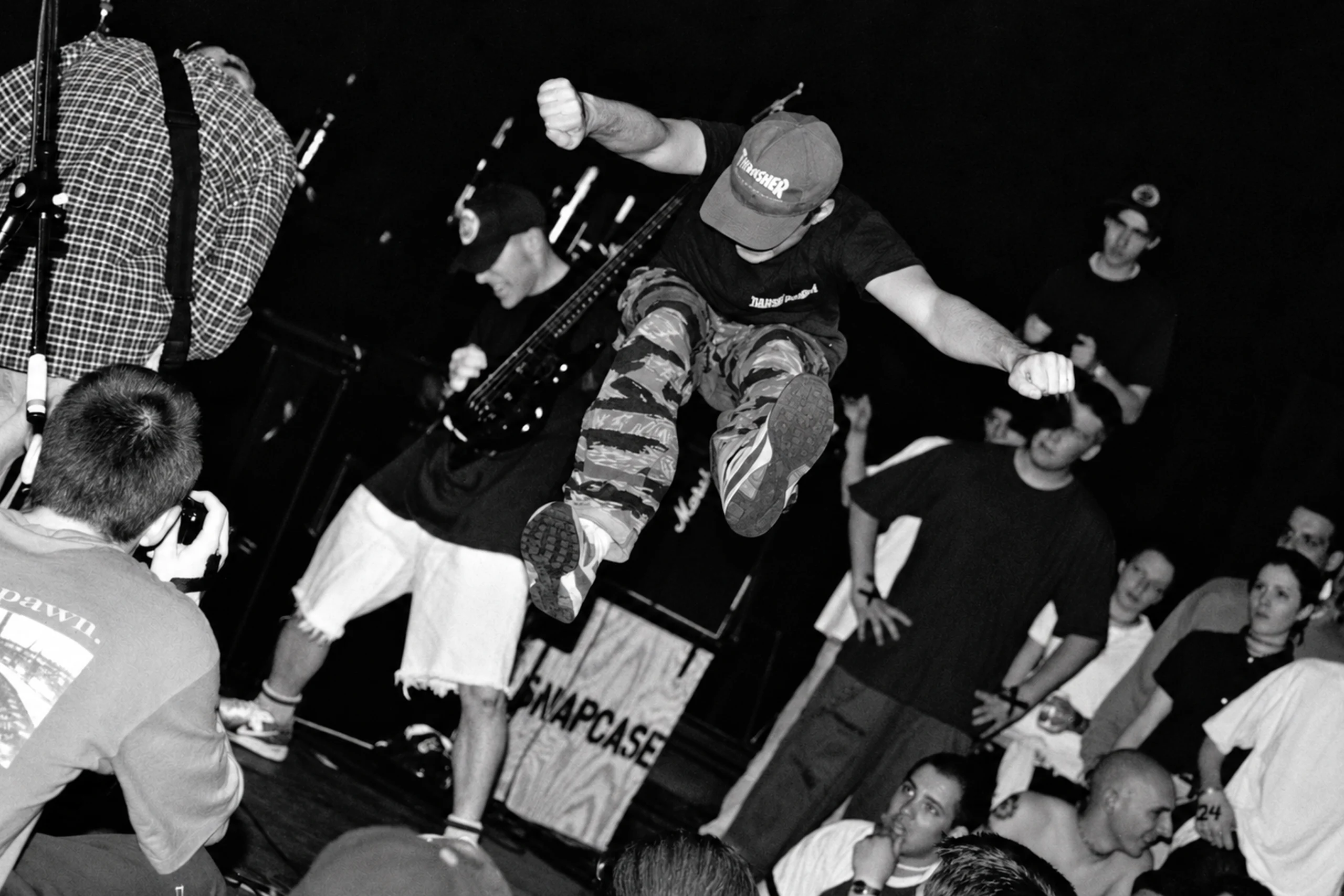
EARTH CRISIS Karl Buechner
6 min read
EARTH CRISIS bring a militant vegan straight edge message out of Syracuse, New York, matching their convictions with crushing riffs and punishing rhythms. Frontman Karl Buechner delivers lyrics confronting animal exploitation, environmental destruction and the damage caused by drugs and alcohol. The EPs "All Out War" and "Firestorm" established their uncompromising approach, while this year’s debut full-length "Destroy The Machines" pushes their metallic hardcore into heavier, more developed territory. With that combination of musical force and outspoken beliefs, EARTH CRISIS challenge listeners to examine how their everyday choices affect the world around them.
Jump to a question (7)
“We don't want to take part in destroying something we love, which is animals, because we have great respect for innocent life.”
Tell us about your latest offering, ‘Destroy the Machines’: its influences and background.
Karl: We’re a hardcore band and obviously we’re hardcore kids, but we like a more metallic sound in the music we listen to, which is metallic hardcore as well as metal. The new record definitely has a metal influence, but the lyrics are still about veganism, straight edge, overcoming personal problems and basically speaking for those who can’t, such as animals. There are different topics, like people being manipulated by cigarette companies, things like that.
Vegan philosophy plays a very important role on all your albums. For those who don’t know, could you explain what veganism is about?
Karl: The fourth track on our new record is called ‘New Ethic’. It’s about veganism, and it spells out very clearly what it is and why it’s important. It means abstaining from all animal products, especially their skins, flesh and fur, basically because we want to make the world a more peaceful place. We don’t want to take part in destroying something we love, which is animals, because we have great respect for innocent life.
Your band has some very extreme points of view. How do people react to your messages?
Karl: I think it’s obvious that we have a positive impact on the hardcore scene in America and here in Europe as well. There are vegan straight edge bands, vegan straight edge scenes and a lot of other kids doing positive things. To an extent their beliefs are very much like ours, if not exactly like ours. As for those who are just there for our sound, just into the music, whether they’re dancing or just like the sound of the record, I think they’ll learn the words or at least read some of them. From there, the seed has been planted. Hopefully someday that seed can grow into something real. It might take years or a week, but perhaps they’ll see something about history on television or an exposé about a slaughterhouse in a magazine. Then they might understand the point of the lyrics, which is to make a change. First look within yourself, then reach out to other people and try to educate them, taking it all the way to doing everything you can to save innocent lives.
In Europe straight edge and vegetarianism or veganism are very closely connected, but in America it’s different, right?
Karl: That’s very true! In America the big straight edge scenes are on the East and West Coasts. Over the last two and a half years the East Coast has pretty much moved with the times. They’re progressing from vegetarianism to veganism, or at least becoming vegetarian. In California things are pretty lacking, which is bizarre because one of the main messages of bands like OUTSPOKEN was animal rights and vegetarianism. I think it’s bizarre that there aren’t more vegetarian kids out there, but it’s growing, and that’s definitely good.
Do you have any contact with animal rights organisations or activists?
Karl: We get mail from Vegan Resistance and some others, and we’re involved in America as well. We once played a benefit for a place called Farm Sanctuary. It’s a place where abused farm animals and animals destined for the slaughterhouse are allowed to live their lives in peace. That’s definitely a good organisation. We talked to the people, and they’re very nice. We’re going to be on a compilation with a song we recorded this spring. It features us, NEGATION and some emocore bands. There’ll be a lot of diverse styles, but it’s for a single cause: raising money for an animal rights activist, a totally extreme sort of guy, a true hero. Unfortunately, he’s now in jail because he was breaking into universities that do animal testing and videotaping it. He was taking direct action, and that’s what he was jailed for. He also sank a couple of whaling ships in Iceland, so he’s a real guy and needs help. That’s where the money will go: to his legal defence fund.
Your best-known release is still the ‘All Out War’ EP, which was just reissued on Victory Records. What do you think of it today?
Karl: We recorded ‘All Out War’ in the spring of 1992. If you compare it with ‘Firestorm’, ‘Destroy the Machines’ or the new recording we’ll soon make and release, it’s definitely a very primitive sound and a very primitive record. But the messages are the same as they are now: straight edge, animal rights and veganism. It’s a good record; the sound quality just isn’t as good or as technically accomplished as it is now.
One much-discussed song from that record is ‘Stand By’, which I think is one of the most extreme songs you’ve ever done. What was the concept behind it?
Karl: That’s the only song for which I didn’t write the lyrics. I’ve written the lyrics to every other song, and obviously I do and will continue to do so. But ‘Stand By’ was written by the singer of FRAMEWORK. Those are his lyrics, but I completely agree with the song. I believe that when people push things to such an extreme, torturing and murdering animals for sadistic pleasure or greed, it’s time to stop their destructive behaviour. Obviously, the first steps in any such situation must always be education and peaceful protest. But when education and peaceful protest don’t work, it doesn’t mean the struggle is over; it means the strategy changes. We value the life of an innocent animal or an innocent human being far above that of the oppressor, and I completely believe in eye-for-an-eye justice.