
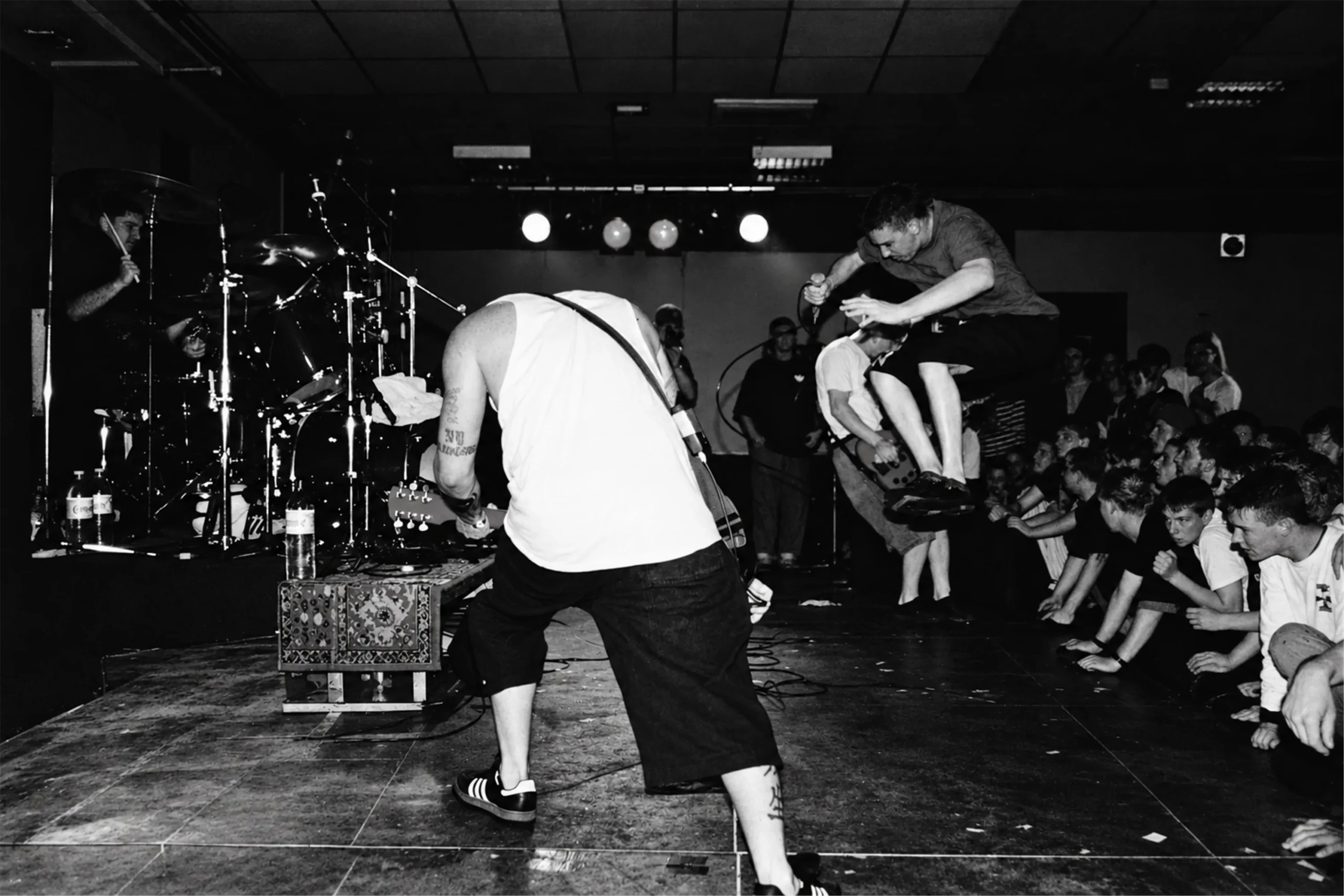
SICK OF IT ALL Lou Koller
17 min read
SICK OF IT ALL are carrying the sound of New York hardcore far beyond the city’s clubs and basement shows. Formed in 1986, the band have built their reputation on explosive live performances and the uncompromising force of “Blood, Sweat And No Tears” and “Just Look Around”. With last year’s “Scratch The Surface”, SICK OF IT ALL have taken their blend of furious riffs, pounding rhythms and shouted choruses to EastWest Records without softening its edge. Their songs confront frustration, social division and everyday struggle with the conviction of a band firmly rooted in its scene. Follow SICK OF IT ALL on Instagram
Jump to a question (13)
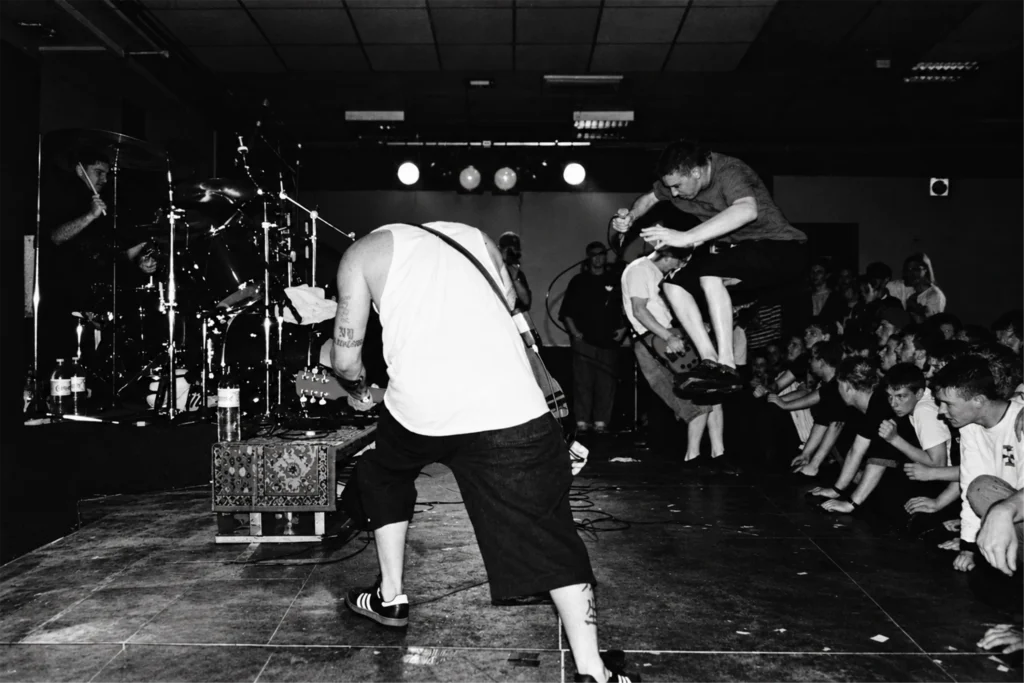
“We still do it because we love the music.”
When I first listened to ‘Scratch the Surface’, it seemed like a guide to hardcore music. You cover many different styles this time, far more extreme than on your last record.
Lou: Some songs were written to show hardcore’s roots. A lot of young bands in America don’t know bands like GBH and DISCHARGE and don’t listen to them because that’s what the death metal kids like. But it’s hardcore; those are your roots. They don’t even listen to Oi! because their roots only go back to GORILLA BISCUITS and YOUTH OF TODAY. There’s nothing wrong with that, but you should go further. We also wanted to show how diverse hardcore is. People say, ‘It all sounds the same,’ but it doesn’t have to. We tried it on ‘Just Look Around’, but we didn’t make it different enough. On this album I think we got the best results. We took the good things from ‘Just Look Around’ and the good ideas from the first album and mixed them together. I think we made our best album yet. A lot of people say, ‘But the first album is so raw.’ Yeah, that’s what it was: our first album. Of course it’s our rawest album. But I think this is our best album musically, lyrically and sound-wise.
How would you describe the main differences between the three recordings in terms of personal contributions?
Lou: We’re proud of every one of them. They show different stages. The first is very raw. Pete wrote 99% of the music and I wrote 99% of the lyrics. On the second, Pete, Armand and Rich wrote the music together, although it was still mainly Pete. I wrote 90% of the lyrics, and Armand wrote more. Lyrically, I think the second was one of our best albums. While everybody else talked about how tough they were, we took a stand against all the gang bullshit. The record just sounded too clean; it didn’t have enough of a live sound.
That’s what we were afraid of on the new record. We got Billy Anderson, who’d worked with metal bands and JAWBREAKER. We told him what we wanted and he said, ‘I know exactly what you need.’ He’s a great guy! He grew up listening to hardcore and punk in California, so he knew exactly what we meant. On the new album all four of us had input into everything. We worked on it, argued, talked and got everything done. I think it’s the most cohesive album we’ve ever made.
Having Craig on bass seems another important factor. The bass is much more intense now, less metallic than when Rich played. What’s it like playing with Craig?
Lou: We’ve known Craig for years, since before he was in AGNOSTIC FRONT or YOUTH OF TODAY. We all grew up together and always wanted him to play with us. Richy was sick one weekend in 1988 when we had three shows, and we needed a bass player to fill in. Craig came in and played all three. It was fantastic! We always knew he’d fit in. We always said that if Richy left again—he’d left once before—we wanted Craig. AGNOSTIC FRONT breaking up was good for us because we got Craig.
‘Goatless’ has a particular background: Wayne Lo shot people in Massachusetts while wearing a SICK OF IT ALL shirt. What can you tell us about it?
Lou: The song is about how the media handled the whole thing. This kid wore our shirt and killed two teachers and wounded four students at his college. Instead of investigating why he wore it or looking into him, they blamed our music and said hardcore was all violent and fascist. ‘Goatless’ is about the media immediately jumping on the music because they saw tattoos, slam dancing and things like that and said, ‘It’s all violent.’ They never read our lyrics or did anything like that. ‘Goatless’ is all about them.
Recently, at a club in Brooklyn, New York, bouncers threw a kid off the stage so that he fell and broke his neck. Instead of suing the club or pursuing the bouncers to get them arrested, his parents want the government to ban slam dancing and stage diving in New York State. If those gorilla bouncers hadn’t thrown their son off the stage, he’d still be alive. If he’d dived and the kids had caught him, fine. But the bouncers threw him so that he couldn’t break his fall.
How do you feel about being on a major label now? Has it proved the right step?
Lou: A lot of people, especially young New York bands, see us now we’re successful, but don’t realise it’s been nine years of touring without making money. We never thought about going to a major label. They don’t understand that, to us, it’s the same thing. We still do it because we love the music. We love the people we meet, the kids, and have so much fun on tour. But young bands only see a band on a major label. It could end tomorrow. When the hardcore trend is over, we’ll be back playing tiny clubs for kids who love the music, like us, rather than people who hear us on MTV. You have to love this music first. If you’re only in it to be famous, get the fuck out. Become a NEW KID ON THE BLOCK or a TAKE THAT if you want fame. If you love the music, stick with it.
You’ve been around so long without making money and always play benefits for different organisations. But many people don’t realise money was never your main priority.
Lou: Not the most important thing, no. We’re not against earning a living, but we’re not out to rip anybody off. We want to use our popularity to bring people other things, to show hardcore is more than slam dancing. That’s why we’ve played anti-fascist benefits here in Germany. In America we’ve played benefits for Amnesty International and other human rights organisations. We try to get people involved.
On your last tour, stickers circulated saying, ‘M.A.D. and Lost & Found have killed hardcore.’ How did you feel about that?
Lou: We’ve faced this in the United States before. Making stickers is one thing; why don’t they start a booking agency? If they hate how M.A.D. does things, start their own agency and do it the way they think is right. I tell you, once they find out how much it costs to bring a band from another country, they’ll stop talking shit. I think it’s ridiculous. To me, M.A.D. brought life back into hardcore. It got a lot of Americans excited again because they saw how much the kids in Europe loved it.
As for Lost & Found, he’s always been pretty straight with us, so I’ve no complaints yet. He’s always done good business with us. Other people have said things about him, but that’s their experience; it has nothing to do with me. We’ll see what happens. I know he releases a lot of bad American bands that never meant anything in the United States. That’s what I feel bad about: these shitty bands come to Europe and kids spend money on them just because they’re American, while you’ve got fine European bands much better than some of them. But as I said, let those kids start their own label and show me how to do it better.
Their idea of hardcore is playing to eighty kids in a tiny youth centre, and that’s it. We do that; we still play youth centres. That’s what I find funny. They say M.A.D. killed hardcore, but on this tour people often ask why we don’t play bigger clubs. We’re playing clubs holding 1,200 people a night, selling them out and turning away about 500. We play squats because we love the music and the people. Saying M.A.D. is killing hardcore is ridiculous. If you dislike what they do, start your own booking agency. If you dislike Lost & Found, start your own label. But once those kids become popular, what will they do? Break up their agency? Stop selling records? They want hardcore to remain theirs and nobody else’s.
I understand getting angry with new kids who don’t know what the scene is about. We’re more popular now, so we see kids who’ve watched MTV commercials coming to shows saying, ‘Let’s run wild and hurt each other.’ It’ll take time for them to learn you don’t do that. It won’t happen overnight.
I’ve heard hardcore shows in the United States are improving and becoming less violent.
Lou: At least at our shows there hasn’t been any violence for three years. We played a huge New York City show last October without any fights. It was completely packed, sold out, and we were surprised there was no fighting. Young kids were at the front, nobody got hurt, everybody was stage diving and looking out for each other, catching each other. It was great. A lot of kids are getting back into hardcore. We go to places we haven’t played in two years, like South Carolina, and kids return saying, ‘Man, I really missed hardcore, the shows and everything.’ They’re happy we’re still around. I think there’s a revival, although for us it never went away, only for certain people.
How is the American scene doing? What are the main differences from Europe?
Lou: European kids are more open-minded. They look for something different or new. In America kids are very lazy. Unless they’re already into hardcore or alternative music, they wait for MTV to show them. Look how long it took GREEN DAY. They used to play to 1,000 people a night, as did BAD RELIGION. Suddenly MTV puts them on, and now they can play to 20,000 a night. The same kids who laughed at those bands and said, ‘What’s that punk shit?’ now sing ’21st Digital Century Boy’. It’s funny, but great for them.
I recently read an amusing article calling SICK OF IT ALL a socialist band. Reading something like that must feel strange, doesn’t it?
Lou: It’s funny and really weird. We have ideals we developed growing up. We all had shit jobs and things like that. I guess people call us working class, which we are. I’ve worked different jobs since I was twelve; all of us have. In interviews we give our opinions about what’s wrong, then someone says, ‘You’re very left-wing, very socialist.’ And, oh my God, we are! In America you’re raised with democracy. It’s a great idea, but it isn’t working because America isn’t a country; it’s a big fucking business. That’s all it is. It’s fine if people say we sound like communists, but don’t tell our parents!
You have two videos from the current album, ‘Scratch the Surface’ and ‘Step Down’. Can you explain their backgrounds and what they’re about?
Lou: Everybody’s critical of making videos, especially hardcore kids. They don’t want you to have videos, especially on MTV. In videos by so-called hardcore bands, everyone’s angry and they’ve got pit bulls and guns. We wanted to show people laughing and having fun at a hardcore show. In ‘Scratch the Surface’ everybody’s diving and dancing without getting hurt. Girls were diving and dancing, and everyone was laughing.
We could have put on a show with several bands and handed out flyers saying, ‘Come to this club on this day and be in a SICK OF IT ALL video.’ Then you’d get a hundred jerks wanting to show off their new tattoos. Instead, we called forty close friends who love hardcore and asked them to be in it. We weren’t asking them to exploit themselves. We wanted to show what fun is and explained what I’ve just said. It’s fun, not tough-guy shit. MTV America said, ‘We have several videos with stage diving and dancing, but none where the kids are laughing.’ We threw rubber chickens around; it was just fun.
For ‘Step Down’ we wanted a mock documentary about hardcore because nobody understands it. We got this old guy who used to do radio shows. He’s really old, about ninety-eight or something. It was touching: he was so surprised we knew his show. By the end of the day all the kids loved him because he’s so nice. He lives in an apartment with his wife and collects social security. He has nothing in his life, and when we asked him to be in the video he was shocked and happy. We sent him a postcard from the road. He never talks to us; I don’t know if he remembers us. But we sent this card: ‘Thanks for coming to the show and doing the video. We’re in Japan now. Wish you were here.’ He’s a great guy.
I know some people may be angry we’re on MTV, but I think it’s cool that European MTV played us so much. America is scared of this music. Europeans can hate MTV all they like; I think theirs is a little better because it plays more diverse stuff. Turn on American MTV and it’s GUNS N’ ROSES, BON JOVI and NIRVANA all day. NIRVANA are a really good band, not one of my favourites, but now I can’t look at or listen to a NIRVANA record without throwing up because MTV made me fucking sick of them. Another band I don’t like but respect is PEARL JAM. They won’t make videos anymore because they don’t want that happening to them.
You’ve toured a lot this year. What’s it like for a hardcore band to play places like South America? Are people interested in the hardcore movement?
Lou: It’s very sad and depressing. The poverty is right in your face. I’ve seen poverty before. We’ve been to Mexico City, and that was sad enough. But in São Paulo, Brazil, we were driving to the show and got stuck in traffic under a bridge. There was a woman and an old lady, obviously her mother, cooking in a garbage can. A baby, no more than two or three months old, lay on a blanket on the concrete. The fumes were trapped under the bridge; they have no pollution controls there. You wanted to get out and give them all your money, but the Brazilian guys said, ‘No, don’t give them anything, they don’t want it.’
One night a homeless man was sleeping outside our hotel. We drove from São Paulo to another city, and he was there; we went to the show in São Paulo, and he was there. We approached him with SICK OF IT ALL shirts because it gets cold there. He had an old plastic bag. We asked, ‘Would you like the shirts?’ He said, ‘No, thank you very much, but I’m fine.’ It was depressing, with the crime and young kids, eight to ten years old, sniffing glue. You see them lying unconscious in the streets. Violent gangs beat those kids up. It was all very depressing.
As for shows, the Brazilian people were crazy. It’s a good outlet for them. We tried to keep ticket prices down and played to 1,000 a night. The kids went so wild we worried they’d hurt themselves. At first there were barriers but no bouncers. After the first song they knocked the whole thing down. We stopped, rebuilt it and started playing again. The promoter put bouncers there, and three songs later I saw a big bouncer beating a kid really hard. I don’t know what the kid did, but I jumped on the bouncer. Our Brazilian guitar tech, Silvio, who works for SEPULTURA, jumped on him too. We pulled them apart; the kid was unconscious.
It was fucking sick. Either we have bouncers beating up kids, or no bouncers and the kids wreck the place. I had someone translate because I don’t speak Portuguese. The kids were shouting, ‘Why the fuck did you bring the bouncers out?’ Once we’d explained through translation, everybody nodded and we continued with a great show. It was a rough beginning, but fun. The kids were nice and the people cool. We had promoter problems in Argentina and got ripped off, but it was fun.
After all that touring, now that you’re so ‘successful’, what are your future plans? How about MTV Unplugged?
Lou: Can you imagine? Acoustic versions of ‘My Life’, with a Kurt Cobain picture behind us? ‘This is for Kurt, man! This is for fucking Kurt, man! Fuck you!’ No, we’ve toured a lot and still have more to do, but no real future plans. We take it step by step.
We just recorded a song for a benefit compilation for Leonard Peltier, a Native American political prisoner in the United States. They asked us because last year being concerned about him was a big American trend; this year the trend is dyeing your hair red. They want to keep the interest going. After big commercial bands like C.O.C. and RAGE AGAINST THE MACHINE, they think bands with large underground followings like us can keep it alive. Some underground kids might get more personally involved. We did ‘Just a Patsy’. A patsy is someone who takes the blame for somebody else. It’s a good cause, and I hope people take an interest rather than seeing it as another trend. That would be cool.