
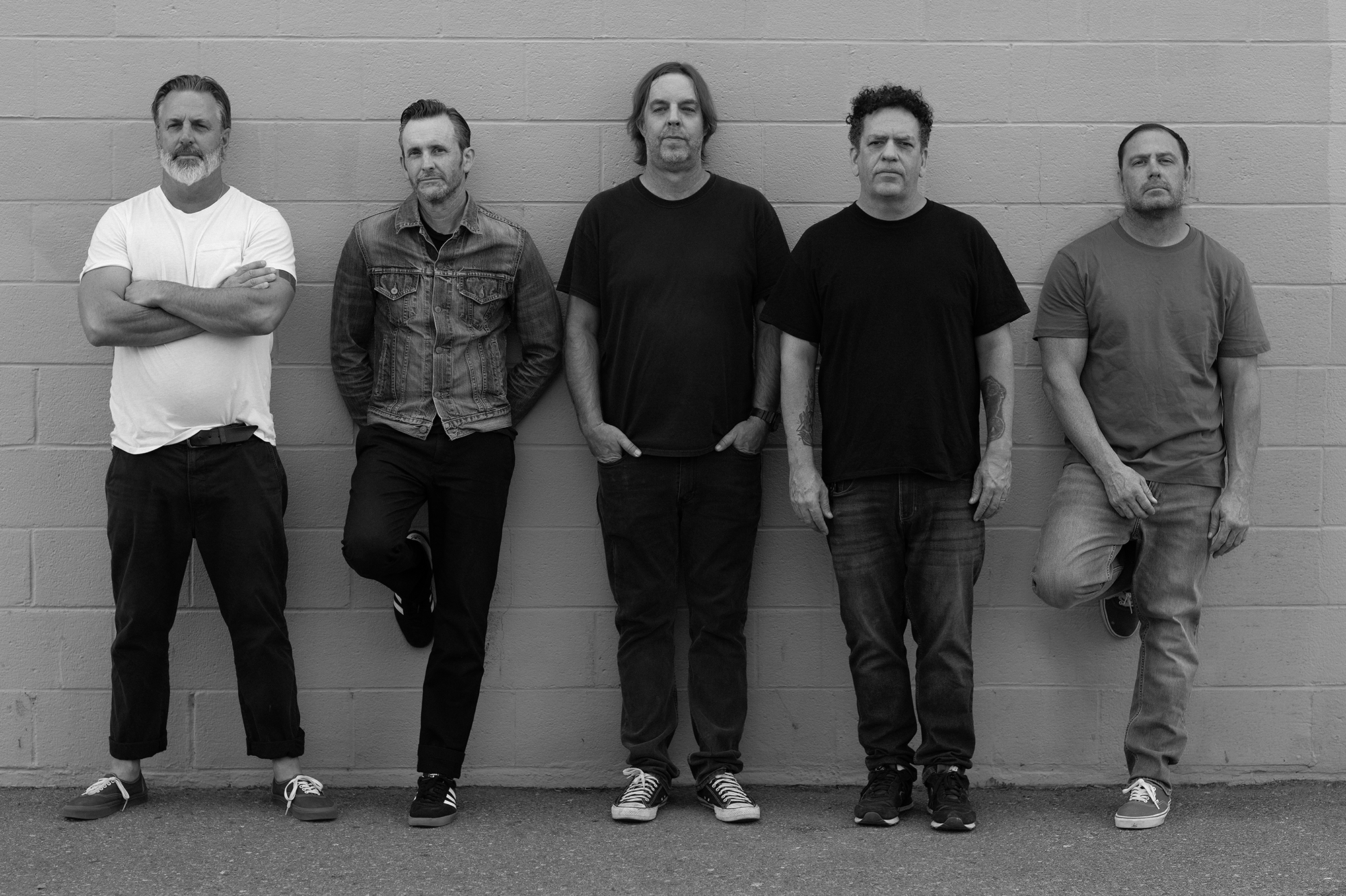
OUTSPOKEN Mike Hartsfield
30 min read
OUTSPOKEN emerged from Huntington Beach, California, at the turn of the 1990s, combining straight edge convictions with a sound that grew increasingly heavy and expressive. From the early urgency of "Survival" through "A Light In The Dark" to the more developed arrangements of "The Current", their recordings trace a band finding its own musical identity. Their original breakup in 1994 interrupted that development, leaving the possibility of a follow-up album unexplored. Now, with an expanded reissue of "The Current" and a European tour alongside IGNITE and CANCER BATS ahead, OUTSPOKEN are reconnecting with their history while looking toward new music. I spoke with guitarist and New Age Records founder Mike Hartsfield about the friendships, frustrations and DIY determination behind the band’s story.
Jump to a question (22)
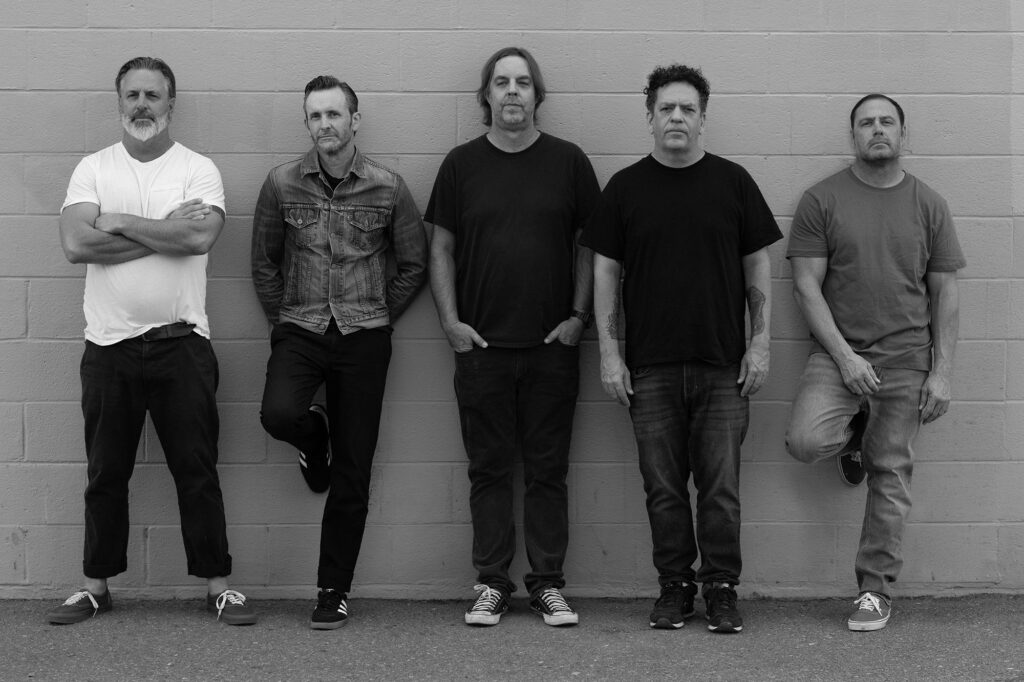
Photo: Kody Piscitello
“The training wheels are off the bike. There are breadcrumbs on the way to the bus. Nothing should stop us getting on, enjoying the tour, the sights and the people, and having a great time.”
OUTSPOKEN’s early rehearsals took place in John’s father’s machine shop. What exactly was the original Spotlight Project, and why did it become OUTSPOKEN?
Mike: John and I met at a show in, I believe, 1988, and started travelling in the same circles. I recognised him as a guy with a great attitude, different from a lot of people. He was a genuine person and very much into the music for the right reasons.
I came as an outsider to the Orange County scene. In feeling that out, I noticed groups of people who kept strictly to themselves because they thought they were the cooler group, or that others were less devoted. John would let me borrow his guitar and amp at the drop of a hat. He was outgoing and friendly in a way I didn’t see other people acting.
When I was getting out of AGAINST THE WALL, he was the first guy I thought I needed to do a band with. I loved his attitude. Who knew what we were going to do? I liked who he was as a person. I called him and he said, “I’ve already got a drummer.” My friend played bass and I could play guitar, so we decided to throw something together.
The great thing was that the Spotlight Project already existed, with Dennis and John writing songs together. We stepped into having five or six songs; John had the demo written. We got together at the very end of 1989, if I’m not mistaken, or the start of 1990, and played our first show in February. We already had material, so it was a great beginning: we were off to the races.
Practising at John’s place was great because we could do it whenever we needed to. John came in with all the songs, and we were ready to go. We started working on newer stuff after that, but that initial project gave us the momentum to move forward.
You have credited John with writing the guitar parts as well as the lyrics for the demo and “Survival”. Which later songs best capture your own approach to writing music?
Mike: My songwriting is a mixture of what I learned from John, Paul from FREEWILL, and Joe from AGAINST THE WALL. Those were the early foundations of my songwriting and style. A lot of times I’ll write something new and think, “That sounds like something I learned from one of those three people.”
When I started writing in OUTSPOKEN, it was those two people plus John’s earlier influences. I play a lot like Joe from AGAINST THE WALL. He was the person I learned to play guitar from when I transitioned from bass.
John has described “A Light in the Dark” as a record that did not fully capture the band live. From your position as a guitarist, what was missing?
Mike: The recording itself, the studio, the engineer: what we knew in 1992 was not what we knew when it came to recording “The Current”. We were novices at recording. I had done a couple of things previously, and we’d done the demo, the seven-inch and the cassette single.
It was a bad decision by Dennis and me, as the labels, to try to save money. In the end, it didn’t really save any. We recorded in a person’s house that had a studio set up. They had done the MEAN SEASON seven-inch, the UNBROKEN seven-inch, the STRIFE seven-inch and a handful of other things. We thought those sounded good enough once they were finished.
In the studio, everything sounded flat: not distorted enough, not punchy enough. The performances could have been better, too. When we were getting rough mixes, we questioned the engineer: “This sounds low-intensity.” He said we were going to a big studio up on the hill. It turned out to be the bass player from RATT’s studio, where we ended up mixing.
We thought we were hearing the bare bones and that it would sound bigger and better. When we got there, they just turned it up really loud in the room, so it sounded bigger. Once we got the test pressings, we thought, “Man, we really blew it.” The production and the performance were both less than we had hoped for. John is spot on with that.
But it was a learning experience, so you could avoid those mistakes on later releases.
Mike: Yes. We were able to remix it with some modern technology a few years ago for the discography release. But it was still like shining up a turd: as long as it’s shiny, it’s still a turd. That was definitely a learning experience.
OUTSPOKEN is still strongly associated with Straight Edge. What did straight edge mean to you personally back then and what does it mean to you today?
Mike: That’s a great question. I don’t think it means anything different, but as I grow older, it is much more of a personal decision. I always thought of straight edge as something I was doing for myself.
If you think about it outside yourself, does my family benefit? Do my friends benefit? There’s this widening energy around you that affects other people. Whatever your choices are, that can be positive or negative. When I was younger, beyond the benefits I felt, I thought it was a good example: people could make a choice that affected their life positively. Hopefully they’re a good person, too.
That was good for me at the time. Over time, it has become something I don’t even think about. It’s such a part of me that it takes zero effort. It’s one of the simplest, most important decisions I’ve ever made.
I’ve been straight edge since 1989, and I feel very much the same way.
Mike: I think we can both speak about being comfortable enough to realise that other people are going to come and go. When I was younger, it affected me more. There were guys I thought would always be here. We sang “True Till Death” together, “Loyal to the Grave” and all those songs. When you’re 20 or 22, you think that’s the way life is.
When you’re older, you see people make different decisions and change over time. To be this age and still be straight edge, and still see it as valuable personally, gives you an interesting perspective. When you’re 20, you haven’t seen your friends change as much as when you’re in your 50s or older.
It probably means more to me now because it has proven to be something of value. At 57, I can look back on being straight edge for decades. I haven’t done the maths in a very long time, but from becoming straight edge in the mid-to-late ’80s to now, the proof is there that it’s something I’ve benefited from.
Your first West Coast tour involved travelling in a Ford Escort and sometimes playing to very small crowds. What are your recollections of that tour?
Mike: It was very ambitious. If anyone remembers the Ford Escort, it’s a very small four-door economy car. We went from the Orange County or LA area to Arizona, then drove up to Portland, Oregon, and Seattle, Washington. It’s a fair amount of driving in a little car: four guys, merch and a decent amount of equipment. Not everything, because we’d arranged to borrow backline in the cities we were going to.
There was incredible weather, terrible weather, a rear-wheel-drive car, and the four of us jammed in there. It was a time when you’re young and just want adventure. Looking back, it was very ambitious. People in our circles, and definitely our parents, were probably thinking, “You’re crazy. The four of you are going to drive this car to Seattle, play a basement show, then drive to Portland and play?”
A lot of people would think that’s crazy. I look at it now and say, “Let’s go again.” We’re often put in positions where we think about what’s not possible: we’d be cramped in a little car. But you’re going to play a show with your friends. Hardcore made me realise that, and I could apply it to decisions in my life, different jobs, businesses and ideas. You’re completely DIY. You can do anything you set your mind to, even drive two and a half days to play for 30 minutes and turn around. That’s possible.
One tour in particular comes to mind. With A18, we had four shows in the Midwest. I worked at a moving and storage company, and we were supposed to move a person’s household from LA to the Midwest. We were going to pack our instruments in the moving van, and the rest of the guys would fly out. I’d drive the van, unload the household items and do the four shows with our equipment in it.
The person cancelled the job; they weren’t moving. But we’d already booked and confirmed the shows. I’m really big on not cancelling. To me, that’s a bad strike. We ended up doing what we’d done in 1990: driving a car to the Midwest, playing four shows and driving home. When things start not happening, I dig in further to complete the mission.
To circle back to touring over 30 years ago, it was an incredible time. At practice last week, we were joking about that trip. We’d write on each other’s faces. Somebody would fall asleep, and we’d put food near them to make it look as though they were sleeping while eating.
To have friends you’ve been with that long and reflect on whether driving a tiny car to Seattle was worth it: absolutely. I’d do it again tomorrow. Maybe even today, if I could get one.
I hope there’s no Ford Escort waiting for you when you come to Europe.
If anybody wants to Google a 1988 Ford Escort, it’s an interesting vehicle.
Your account of the 1994 breakup emphasizes touring opportunities you could not accept. From your perspective, what was the real moment when you knew OUTSPOKEN was over?
Mike: I think it was a lot of my doing. From 1990 to 1994, when we started and first officially broke up, the scene was growing. SICK OF IT ALL had become a huge force in Europe. We saw them opening opportunities for bands. Before that, I’d seen FOUR WALLS FALLING go to Europe. Bands were going over.
We’d gone to the East Coast three times and always had tremendous fun. I was looking at Europe and thinking, “We’ve got to get there.” I remember seeing pictures of VERBAL ASSAULT playing different venues in Europe in the ’80s. It seemed like the moon: so far away, such an adventure. I became fixated on travelling, touring and getting to Europe. It seemed like such a wonderful place.
In 1993, we’d recorded “The Current”. I thought we were firing on all cylinders. I could see the band’s growth and the songs developing, and I’d started writing more material. I was pushing the band forward, but John had a job in San Francisco and the rest of us lived in Southern California. It was a struggle to keep the band moving and maintain momentum. Other bands toured the US regularly; we were doing weekends and local things whenever we could.
Looking back, that probably kept us more valuable because we weren’t playing all the time or wearing out our welcome locally. At the time, though, I was pushing: we’ve got to do this. As we said earlier, people’s lives change. They’re growing up, establishing roots, doing what you do in your 20s.
I thought I could start something new or jump onto a tour already happening to get what I needed out of music. I credit, or discredit, myself as pretty much the reason we stopped in 1994, as I remember it. If we weren’t going to do this right, and were struggling even to do what seemed so limited, what could we do? Go to the East Coast for another weekend, do the same thing again, or do something new? I didn’t see us in a position to do new things.
Thinking back now, I probably should have shut the hell up and written more songs. All that energy I put into whatever I did at the end of 1994 and in 1995: imagine if I’d sat down and written ten more songs. That sums up the breakup.
Following up on that, you said that a full-length recording following “The Current” would have something really special. How far did that record exist beyond an idea?
Mike: Not very much. At our last Orange County show in 1994, we played one new song that a bunch of the guys don’t remember. We have it on video somewhere. I still remember the riffs.
If we’d written a couple of songs, we probably would have gone through with another EP or finished writing a record. But we had one song, a gang of riffs that continued in the style of “The Current”.
John identifies “Spark” as the last song OUTSPOKEN ever wrote. Listening to its guitar arrangements now, what does it reveal about the direction the band was moving in when the development stopped?
Mike: It’s funny. When we started playing again not too long ago, Travis had to remind me how to play the riffs I’d written in that song. I had about 95 percent of it. He said, “No, it’s this and that.”
Its style is an absolute reflection of what I acquired from my friend Joe, who played in AGAINST THE WALL and wrote that seven-inch. Those riffs and the style I was emulating gave me flashbacks to 1989, learning how to position my fingers to play a power chord.
It’s funny to have that much time between learning guitar, writing a riff in that style and then, 20 or 25 years later, relearning it. I have a lot of those moments, putting together pieces of our history and what we’re doing now, and seeing how they relate.
Another thing about “Spark” was that it was three parts that didn’t really know where to go. Jai’s bass playing tied it together. If you listen without the bass, there are times with an open note because I didn’t know what to put there. Jamming it in practice, Jai put in bass parts, messing around, and tied all the different parts together with what he wrote.
Why was “The Current” the right release to revisit as a standalone record now rather than presenting this material within a broader history of OUTSPOKEN?
Mike: That’s an easy one. Writing and recording “The Current” was such a redemption: we could write and record something good. We’d always been proud of the demo and the seven-inch. The studio and engineer had done so many great things. There’s nothing about recording those that I regret. Zero. The equipment, studio and engineer gave a great, raw example of how we sounded at that time.
“A Light in the Dark” was a misrepresentation, I guess I have to say. We left without that satisfaction of wanting to put it on and have our friends, family and people who came to shows hear it. There was none of that feeling.
With “The Current”, I think we wrote our best material. The years of playing, the tour experiences and how the songs developed: our last material is personally our best. It’s what we still like most now.
When we did the deal with Equal Vision, it made sense to do what we were most excited about. If we were starting to play shows again, it was best to go to the most recent material in our recording history.
What source material was available for the reissue? Did tracking it down reveal anything about the original recording that you had forgotten or remembered incorrectly?
Mike: I think something will probably come to me as I talk, because there was something remembered inaccurately. We had a great deal of the source material.
I think the biggest mistake we made with “The Current” was this: the studio was much more expensive than any we’d used before, for the right reasons. It was much better. We recorded on two-inch tape; everything is digital now, of course. The studio let you use its tape for free instead of buying your own reels. The drawback was that you didn’t keep your original tracks. You mixed down to a quarter-inch, or whatever it was at the time, or a half-inch, and left with your finished product. You couldn’t go back and do anything with it. You were walking out with what you’d recorded and mixed.
There’s not much I’d change about that recording in its entirety. We got it right for the time and place. I wouldn’t want us fiddling with it too much now, getting anxious to remix it. There’s nothing I think we forgot to do, so I wouldn’t mess with it.
We reached out through social media for pictures, flyers and anything people had. Dennis masterminded the booklet and the entire layout. The cover photo is us splashing around in a swimming pool. We took a disposable camera and jumped in Popeye from FARSIDE’s pool. We spent an afternoon splashing water and taking photos.
At the time, it was popular to find something you liked in a book and put your logo on it as a cover. That worked quite a bit, but it bit a few people in the butt. Now, with Google Images, you could be spotted using other people’s artwork. We wanted these things to be our own.
It was a great experience. There are pool photos of Popeye and Isaac from CHORUS OF DISAPPROVAL lying on lounge chairs, and pictures they took of Travis and me throwing each other up in the air. At some point, I want to write something for our social media about the day we took those photos.
What brief did you give Brian for the remaster? Was there anything in the original sound that you wanted him to protect, even if it might be considered a flaw?
Mike: I don’t think so. Brian’s a super-smart guy. We knew he would use modern technology to emphasise parts of the mixdown we had. I had no reservations that we’d get back something that made us say, “How could he do this? What is he thinking?” I don’t think anyone did. He’s experienced, and I think he knows exactly what to do. There were only positives to be had.
There was a lot of trust there.
Mike: Absolutely. We’ve known him since the early ’90s. Revisiting this with people we knew and loved back then was key. Every chance to bring in people who connect with what we’ve done is a great experience.
I don’t know if longevity is the word, but I guess it must be. To have this time capsule from the early ’90s that we can go back to and revisit is a great thing. It’s one of those experiences you can only understand with time. We’ve heard our parents say, “When I was your age,” or, “Back in my day.” It’s true for anyone playing music, doing sports or whatever: having the longevity to look back and revisit things, or value them in a way you perhaps didn’t at the time.
On the new record, “Spark” now sits in the middle of the running order and “Spoke” closes it. How was that sequence chosen?
Mike: That’s a great question. Having recorded them all at the same studio was a huge benefit. They really belong together. To tell you the truth, I don’t remember how we chose it. It might have been, “What do you think of this? What works best?”
I think it may simply have been that “Spark” was the last original song we did, and “Spoke” was a cover. It was probably about having all the originals run together, then the cover at the end. I think that’s it: the originals working together.
It’s good to have them together in one place instead of on multiple releases. As someone who runs New Age Records, what made working with Equal Vision the right arrangement for the reissue?
Mike: It was easy because I wanted to be a step away from the project, not overly connected to it. Before, Dennis and I would bring up ideas and decisions, then we’d make them collectively. I like not being part of that circle. Individually and collectively, we wanted the release somewhere else. Equal Vision is a bigger, better platform for the record.
There was no struggle with me holding on and saying, “It was here once; it can’t go somewhere else.” I wanted somebody else’s ideas and promotion tactics at the forefront. I didn’t want responsibility for that. I know people who run labels and play in bands on them like that control. I’ve had it for a long time, and I’d like to try something different.
It would be a detriment to the others for me to say it had to stay in a smaller realm rather than go where it needed to. It was great not feeling I had to micromanage it. The recordings were taken care of, Dennis handled the layout, and we put it in the hands of someone more than competent to make it as big as it could be.
Everything worked out. It was a great decision, and we’ve all benefited. The band can do things without me worrying about records getting wherever they need to go. We still have to make merch and get records from the label, but there’s much less responsibility.
I don’t know if it’s the time that’s passed or the maturity that comes with it, but it’s easier than it used to be, when we’d knock ourselves out with everything that needed doing. We can just do the band and have those things taken care of. I appreciate being a step away from the record process.
People disagree on whether “The Current” originally appeared in 1993 or 1994. Can you untangle when the songs were written, recorded and released?
Mike: Absolutely. 1993 was the year of its recording and release. I’m going off what I believe to be true off the top of my head: we played the East Coast twice in 1993, and got the records before one of those trips. We had them with us in the van for the first time and carried them with us.
By the time it was released to distributors and stores, it was the end of 1993. Then in 1994 we did “Spark” and “Spoke”, at the very tail end. But “The Current” was definitely 1993.
Thank you for clearing that up. The Jon Bunch Memorial in 2016 helped bring the band back together. Why was that particular night powerful enough to overcome the old conflicts within the band?
Mike: Time is a recurring theme here. Time, understanding and the loss of somebody very close to people were a huge inspiration. Once Jon passed, everyone’s reflections were deep and honest. I don’t know if taking somebody for granted is the right term, but when people are accessible and around us, especially when you’re younger, you don’t think that it could end.
Those hard realities turn you around and show you that losing people is real. It was pretty simple. We’ve had good people in our circle who talk sense to us now and then. Our friend Chris, who put on the Jon Bunch memorial show, has always been a great asset to us as people, as a band and as friends. He’s looked out for us.
As I remember, the request coming from outside felt different from a band member trying to do something we hadn’t done in years. You can look sideways at people’s motives. For me it was an easy yes. We’d known Jon since the late ’80s, and he’d continued supporting the genre even as his band changed. Some people didn’t see SENSE FIELD as hardcore or punk. I saw him chasing a dream in the best way possible and fulfilling it.
Everybody loved Jon. I don’t believe I ever heard a bad word about him, before or after. It was an easy decision for us.
Something that plagued us through the years was our level of communication. You’ve got great friends, but you’re emailing or texting instead of talking, and things can be taken different ways. Our inability to communicate was one of our conflicts. The Jon Bunch show was a way to let our egos down and communicate: “Has anybody got any problems? Okay, great, let’s do this.”
The May East Coast dates were announced as your first there in more than 20 years. What did these shows teach you about pacing the set that you can now take to Europe?
Mike: Going to the East Coast in May brought us up to date. The term “reality check” comes to mind, though I don’t know if that’s the best representation. None of us had played shows there in such a long time. It was a reality check in stepping outside our comfort zone. East Coast shows had always been great for us.
To our credit or discredit, in the ’90s we always drove from California to the East Coast. As you’re laughing now, everyone would ask, “Why don’t you just fly and rent a car?” Would I do it again? Of course. I constantly reflect on being in a van in the middle of nowhere. You learn an incredible amount about yourself, your friends, your life and life itself.
But back to the question: we flew this time, which is a very different experience and much quicker, might I add. It’s quicker to fly. It prepared us for what’s in store from here on, as long as we choose to keep doing this. The shows were fantastic. I don’t know if I expected that. I’m aware of the time between being an active band and now, our age and the band’s age. You don’t know what to expect.
Playing with JUDGE told me we’d play to people in our age group. Playing with FURY meant kids a generation or probably a couple of generations after us, and kids younger than them. It was a great mixture of as many age groups as you could imagine at a hardcore show in Philly or Massachusetts.
The Brooklyn show, between Boston and Philly, was incredible. It was a matinee. We walked into the venue, and “The Warriors” was on the TV. I thought, “Perfect! This is happening!” We met people we’d only spoken to by phone or text.
It prepared us for Europe to be that again: seeing someone whose name I remember because they ordered a T-shirt, or someone I met on a STRIFE tour, or Marc from M.A.D., whoever comes into your world. Those things are still cool to me.
That’s a benefit of touring: seeing friends you wouldn’t under normal circumstances. I don’t have the resources to go to the East Coast for a few weeks just to meet everyone. Hardcore shows and the hardcore community are a real community. We grow up through this. It’s a huge community to us.
OUTSPOKEN, IGNITE and CANCER BATS bring different musical histories to this tour. What aspect of OUTSPOKEN do you want a listener who primarily came for the other bands to recognize before your set ends?
Mike: I’m glad we’re playing before them and not after them. I’m aware of who most people are coming to see. The benefit of touring is getting in front of people who might never otherwise see you.
European crowds have always included a wider selection of walks of life and genres. The crowds I’ve seen seem interested in music above anything. If they like something, they go to different concerts. For years, and partly still now, I’ve stuck to what I know and like. I’m less adventurous about trying new things.
On the tours I’ve done in Europe, I’ve seen people who don’t fit the stereotype of a hardcore kid. They’re people who like the music, or are open-minded and interested in trying it. They come to that club all the time because there’s something new, a different adventure.
We get to play in front of different types of people, as well as IGNITE and CANCER BATS fans. What do I want them to experience? I hope we do a good job. I hope we do it well enough that we’re not thinking, “That was terrible; I messed up.” I hope there are none of those thoughts, and that it’s perceived as a good job.
I hope we add something to the tour. The opportunity IGNITE has given us is the perfect scenario: fly over, get in the van and go. When your time is done, go to the airport and go home. They’ve arranged equipment and places to sleep. Everything is done.
As the reissues come out, we’re not starting from, “How do we get to Europe? Let’s look online. What do we do? Who do we go with?” If we couldn’t accept this offer, I have a feeling we’d never go. The training wheels are off the bike. There are breadcrumbs on the way to the bus. Nothing should stop us getting on, enjoying the tour, the sights and the people, and having a great time.
The original idea was to do the entire leg. We ended up splitting it with MEAN SEASON because of work commitments and other things. It came close to not happening. Luckily, Travis suggested dividing it in half with MEAN SEASON if we couldn’t do it all.
The worst thing would have been going to IGNITE and saying, “We can do half. Can you find another band to meet you where we stop and join the tour?” That’s a headache. I don’t think a band wants to take you for half the tour, then find someone who can get to the pickup point.
Travis suggested MEAN SEASON could do the other half. I thought that was perfect because we share members. It’s an easy turnover. We coordinate the people, and IGNITE doesn’t have to worry. We don’t become a headache after they’ve offered us this incredible opportunity. I think it’s going to be great.
Now that “The Current” has received its first 12-inch pressing in 2026 and you are playing shows again, do you see OUTSPOKEN as a finished chapter, a piece of history, or the beginning of an entirely new chapter?
Mike: 100% the beginning of a new chapter. After the years of issues that kept us apart, I think we’re so far past that. We’re grateful to be in a position where we’re clear-headed. We’re practising more than we’ve ever practised as a band, especially with the tour coming up.
Our approach to the songs is different because we’ve had years of playing them, and the time off has kept them interesting. We’re rediscovering nuances in music we wrote so long ago. John is singing at practice, and his voice sounds better than ever.
Everyone has continually played music. It reminds me of INSTEAD’s reunions. Nobody was surprised they were great because everyone had kept playing. If you stopped seeing them in 1991, or whenever their last show was, then saw them come back, it wasn’t surprising how good they were.
We’re still growing as musicians. Through our time together and apart, everyone’s remained interested in playing. Nobody feels burdened by practice or sees it as a chore. It’s great being in a band where the singer shows up and sings every song every time. If you’ve been in a band, you know singers sometimes say, “I sang it once. That’s good.”
Everyone takes it seriously now, and we’re practising more than ever. I hope we sound better, and the rehearsals pay off so we can have fun rather than worry about forgetting parts.
At the last practice, and in our text group, we were asking, “Who’s got new songs? Who’s got riffs?” Everybody had a few things. John asked what I was kicking around. I played the riff from the last song we wrote in 1994. He didn’t remember it, so I showed him how the parts went together.
There are a few covers I’d like to do for fun, too. If we book studio time for a handful of new songs, it would be great to fit a cover in. If everyone gets their ideas together, I think we’ve probably got an EP in the works.